

I Didn’t Have Sex for 18 Months: Anxious-Avoidant Attachment, Grief, and Relationship Repair
I didn’t have sex with my partner for almost a year and a half.
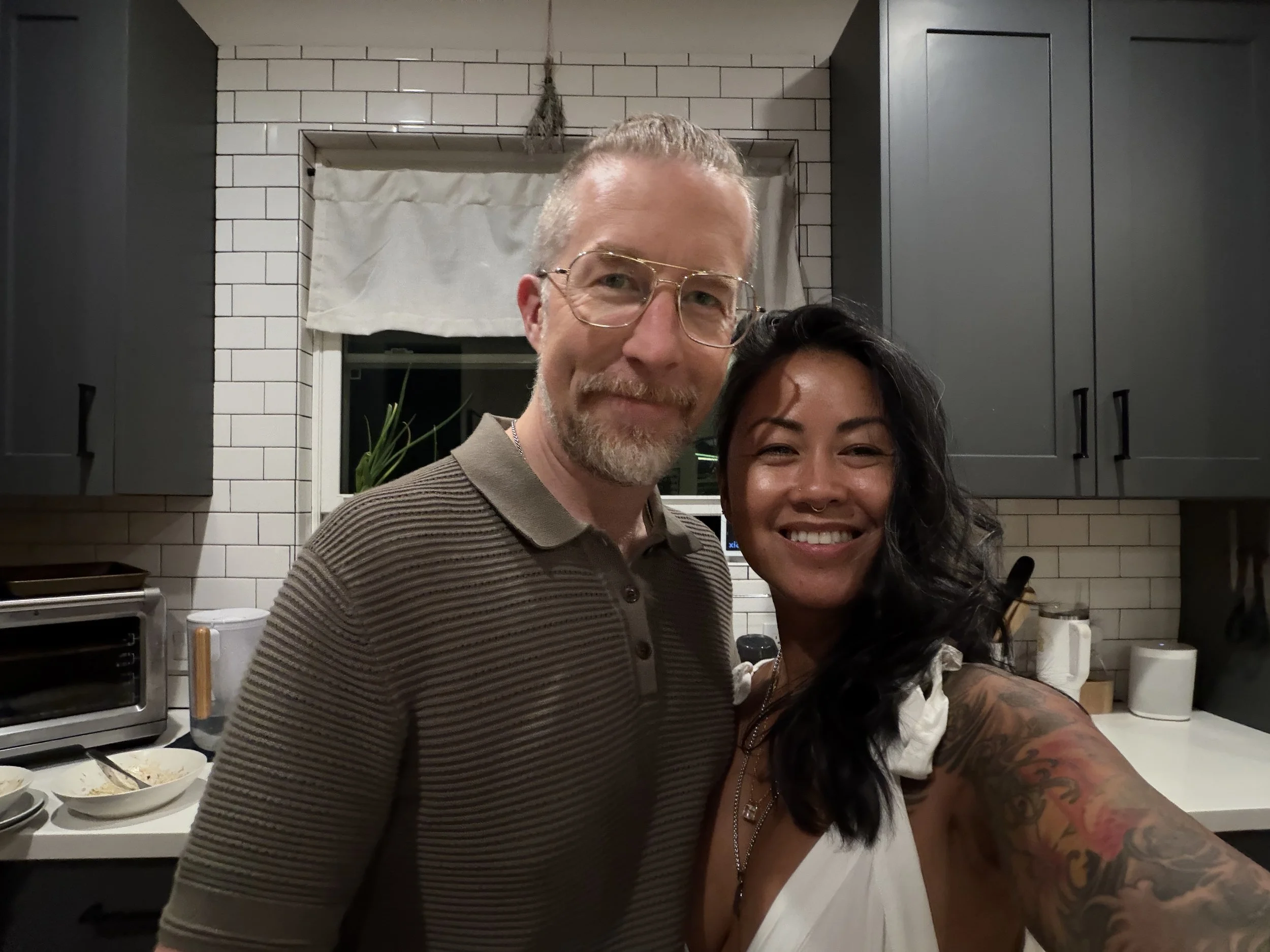
For someone whose work lives so deeply in the body, intimacy, desire, and pleasure, that is not an easy sentence to write. But the truth is, those eighteen months taught me more about love, attachment, and vulnerability than any season of ease ever could.
Last year, we found ourselves in what most people would call an anxious-avoidant dynamic. I would pursue, trying desperately to restore connection, and he would withdraw. The more distance I felt, the harder I fought to close it, and the more I pursued, the less safe and accessible the relationship felt to me. We tried couples coaching, but after a few sessions, the tension had become so thick that our coach suggested we downshift our relationship into a “friendship zone.”
That suggestion landed at one of the most vulnerable moments of my life. I had recently been diagnosed with panic disorder. My dad had died only months earlier. My company was losing its financial runway, and I was beginning to question my ability to hold space for others while so much of my own life was falling apart.
For nearly a year, we walked on eggshells around each other. The love and connection that had once felt so alive between us became almost impossible to access. I could see that two deeply caring people were caught inside survival patterns that neither love nor intelligence alone could resolve.
And still, we slept in the same bed. We made dinner. We raised Liv. We moved through the ordinary rituals of our life together while trying to keep the temperature of the conflict low enough that we could continue functioning.
It was excruciating to feel so far away from someone who was still lying beside me every night.
Here was a man who had generously offered his love, commitment, and devotion to me and my children, and yet the pain of my past made it difficult for my nervous system to soften enough to fully receive what he was offering.
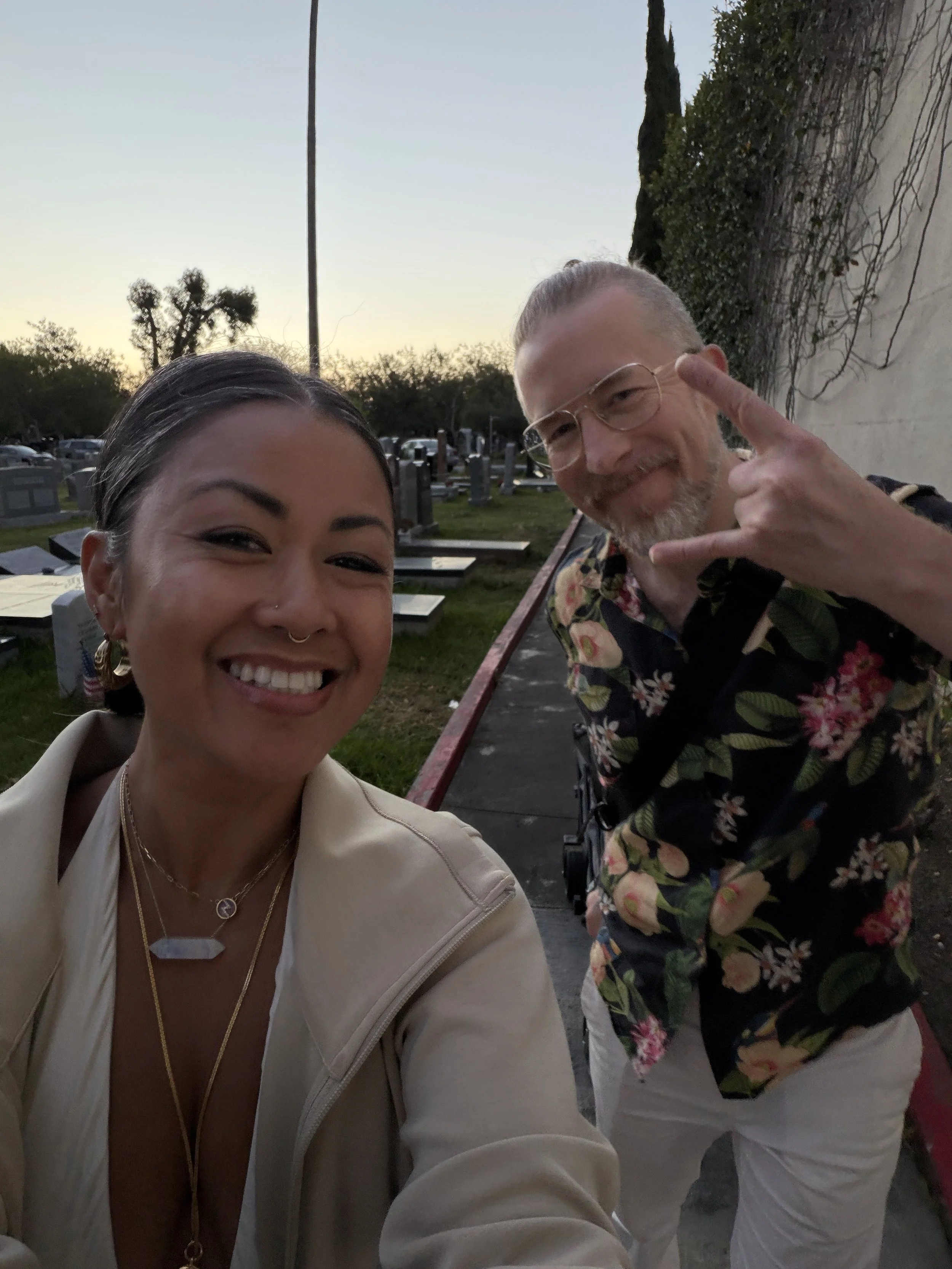
I was asking for love through the language of fear because I did not yet know how to expose the grief underneath it.
Much of that grief belonged to my oldest wound: I had never felt fully wanted or accepted by my mother. Some part of me carried that unworthiness into the love my partner was offering me, and I began to interpret moments of distance as evidence that I was once again unwanted.
When I said, “Why don’t you just break up with me?” I was speaking from the part of me that already believed he would eventually leave. I wanted him to prove that belief wrong—to reassure me that I was chosen, accepted, and worth staying for.
But each time I threatened the relationship, I created the very distance I was terrified of. I was asking for reassurance through words that made both of us feel less safe.
I also began to see that I was carrying years of anger and resentment toward my ex-husband into our relationship.
During the divorce, my ex largely abandoned his role as a co-parent. He stopped engaging in the conversations and planning required to understand and respond to our children’s needs. I was left carrying the emotional labor, the decisions, and much of the practical responsibility of parenting on my own.
That abandonment touched every older wound already living inside me. It reinforced the belief that I would ultimately be left to handle everything alone—that even when a man said he loved me and my children, I could not trust him to remain emotionally present when life became difficult.
My partner was not my ex-husband, but my nervous system did not always know the difference.
When he withdrew, I was not only responding to the man in front of me. I was responding to years of feeling unsupported and unseen, and to the childhood pain beneath those experiences. At times, I expected him to answer for injuries he had not caused. I interpreted his need for space through the lens of abandonment, and resentment that belonged to my past entered our conflicts as though it belonged entirely to him.
The work asked me to separate the past from the present: to honor the very real anger I carried without making my partner responsible for repairing what another man had broken, and to recognize when I was responding to what was actually happening between us and when an older wound had taken over the room.
And there were moments when my words did exactly what words like that can do. After hearing the relationship threatened enough times, my partner reached a point where he no longer knew whether he wanted to keep choosing it.
And still, my stubborn ass could not accept that our worst season had to define the ending.
Something deep inside me knew this was not over. Beneath all the hurt, distance, and protection, I could still feel something alive between us. I was unwilling to let the worst season of our relationship become the final chapter of our love story.
At the beginning of this year, I set an intention that something had to change—not only between us, but within me. We found a five-month somatic attachment repair program, and I encouraged us to enter it together. I also chose the practitioner track, wanting to deepen my own understanding of attachment and expand the tools I could bring into my coaching work.
In traditional therapy, I often struggled to articulate what was happening beneath the intensity of my emotions. By the time I reached the vulnerability underneath, I already felt misunderstood, ashamed, and desperate to be seen.
This work brought us into a different language: the language of the body.
It showed me that much of what I had been calling a relationship problem was also an old attachment injury being activated inside a present-day love.
I began to recognize how early I had learned to scan for changes in connection, how quickly distance registered in my body as danger, and how hard I would fight to restore closeness once I felt it slipping away. Beneath the anger and urgency was often a much younger grief: the fear that love could disappear without warning, that my needs would be too much, or that I would have to intensify my pain before anyone understood how deeply I was hurting.
Perhaps the most confronting realization was that receiving consistent love required its own kind of surrender. Pursuing, protesting, explaining, and fighting all gave me something to do. Receiving asked me to soften without guarantees. It asked me to believe that love could still be present even when it was not being expressed in the exact form my nervous system wanted in that moment.
I learned to locate the grief before it hardened into accusation. I learned to ask more directly for comfort, reassurance, space, or repair. I learned that my feelings could be real and worthy of care without making my partner responsible for rescuing me from them.
For five months, I looked honestly at my attachment patterns and the ways they shaped not only my relationship, but how I related to myself, money, work, purpose, and the world around me. Week after week, I practiced new tools inside the container and began bringing what I was learning into the way I showed up in my relationship.
But perhaps the hardest part of all was letting go of the outcome.
I had to stop using healing as another strategy to make him choose me. I had to release the belief that if I did the work correctly, I could guarantee the future I wanted.
I had to surrender the version of our love I was clinging to and allow the work to change me, even if it did not save us.
For me, surrender looked like letting the relationship die inside of me.
I grieved all of it. I grieved the home and life we had built around my children. I grieved the stability I had allowed myself to imagine would always be there. I grieved the adventures I had mapped out in my mind and all the places I imagined we would travel together. I grieved the aliveness our sex life once fed inside of me. I grieved the small, tender moments I had pictured us sharing in our backyard ten years from now, when both of the kids were grown and well into lives of their own.
I let myself feel the loss of a future that had not happened yet.
Not because I had stopped loving him, but because I could no longer make my healing dependent on whether that future would still be mine. I had to love him without gripping the relationship. I had to allow what we had been to end without knowing whether something new would grow in its place.
Then, last month, the long winter between us began to thaw.
There was no single conversation that repaired everything. We had spent months working with the material beneath the material: the scars left by our earliest attachment figures, the pain our minds had learned to explain but our bodies had never fully metabolized, and the ways we had each learned to protect ourselves from the very closeness we longed for.
I began to experience our connection differently. There was less urgency inside me, less need to force resolution, and more capacity to hear what was underneath the words. Tenderness could appear without my immediately gripping it or bracing for its disappearance.
And this month, I sat with iboga.
I want to be clear: iboga did not fix my relationship. It did not teach me how to repair after conflict, take responsibility for my survival strategies, or ask for love without threatening the bond. That work had already been happening for months through repetition, accountability, grief, and practice.
What iboga offered me was more space inside myself. It felt like a clearing within my own nervous system—not a repair of the relationship, but an increased capacity to meet it without as much fear and protection.
When I returned, I could feel more of what had already begun to shift.
The love that had never fully disappeared beneath the fear, grief, resentment, and protection began to feel accessible again.
I don’t know how the rest of our love story will unfold. And for once, I’m not sure it really matters.
What matters is that we are no longer trying to rebuild our relationship on the same foundation that collapsed beneath us. There is something new here now—something we can consciously co-create from rather than unconsciously reenact inside of.
We have new tools, a shared language, and a much deeper appreciation for what it means to be held within one system of love while still being two separate nervous systems.
We are learning how to belong to one another without losing our connection to ourselves, and how to let the pain of our past inform us without allowing it to keep writing our future.
Maybe this is what secure love actually asks of us: not certainty that we will never hurt each other or a promise that the story will unfold exactly as we once imagined, but the capacity to meet what is here with more honesty, responsibility, tenderness, and choice than we had before.
Whatever happens next, our worst season did not get the final word.
